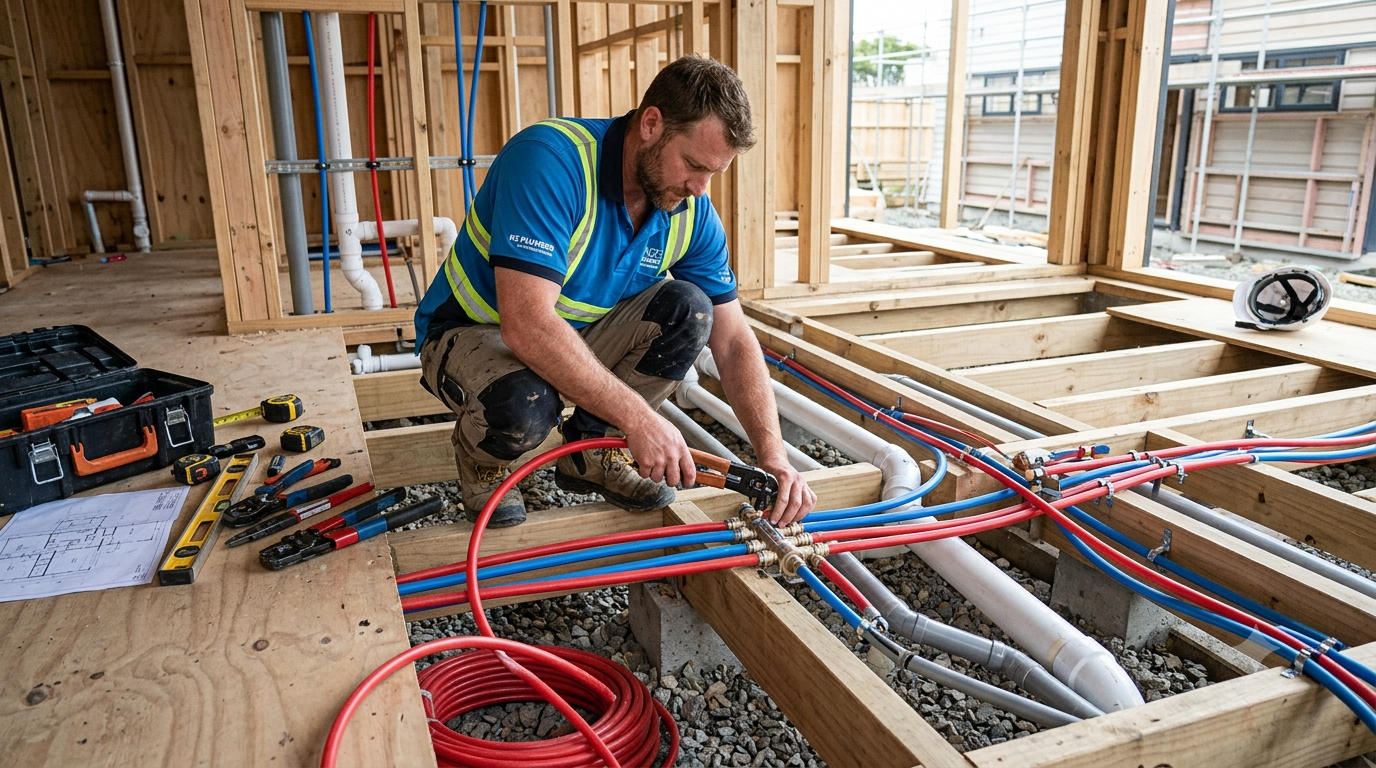
The average hourly rate for a licensed plumber or gasfitter in New Zealand ranges from $90 to $140+ per hour in 2026. For a standard 3-bedroom, 2-bathroom new build, the total plumbing, drainage, and gas fitting package typically ranges between $12,000 and $25,000+, depending on run distances and fixture specifications.
Plumbing and drainage are among the most heavily scrutinised infrastructure phases by councils. In NZ, water management is strictly regulated — every pipe gradient, vent location, and backflow prevention device must meet rigorous standards to secure your Code Compliance Certificate (CCC).
In this guide, a Quantity Surveyor breaks down the realistic 2026 market rates for residential plumbing and drainlaying in NZ, and the hidden below-ground costs that consistently push budgets up.
How Plumbers Charge in NZ: Hourly vs Fixed Contracts
Plumbing contractors typically split pricing into hourly rates for renovation/maintenance and fixed-price milestones for new construction.
1. Hourly rates & sub-trades
- Registered plumber / gasfitter: $90 – $140 / hr
- Certified drainlayer: $95 – $145 / hr
- Apprentice / labourer: $55 – $75 / hr
QS Note: Expect a vehicle or call-out fee of $50 – $95 per visit to cover gas-testing equipment, tools, and transit.
2. New build plumbing packages (2026)
For new housing, contracts are divided into three operational stages:
| Construction Phase | Cost (150m² home) | Work Included |
|---|---|---|
| Stage 1: Pre-slab / drainage | $4,500 – $8,000 | Laying major PVC drain pipes under the gravel layer before the slab is poured |
| Stage 2: Pipe rough-in | $5,000 – $9,500 | Running PEX hot/cold water lines through open framing before GIB lining |
| Stage 3: Fit-out & commissioning | $4,000 – $8,500 | Installing tapware, mounting toilets, connecting the hot water cylinder, pressure testing |
The Hidden Cost Drivers
Watch for these three major infrastructure triggers:
1. Drainlaying and council mains hook-up ($3,000 – $7,000+)
Plumbing ends at the house wall; drainlaying carries waste from the house to the council mains network. If your site is far from the connection point, you pay significantly per lineal metre for trenching, PVC pipe, and public stormwater/wastewater tapping fees.
2. Hot water system selection ($2,500 – $8,500+)
Your water heating choice heavily dictates your upfront mechanical budget:
- Standard electric cylinder (180L–250L): $2,500 – $4,000 (mains pressure, cost-effective)
- Continuous flow gas (e.g. Rinnai Infinity): $3,500 – $5,500 (requires a certified gasfitter and gas bottles or natural gas connection)
- Hot water heat pump cylinder: $5,500 – $8,500+ (high upfront cost, lower long-term running cost)
3. Council inspection failures ($300 – $600 per re-test)
The council inspects plumbing twice — at pre-slab and pre-line (pressure testing) stages. If a joint leaks or a gradient is incorrect, the inspector issues a failed notice. You are billed for both the council re-booking fee and the plumber’s hourly rate to fix and re-verify the work.
Frequently Asked Questions
Can I do my own plumbing or swap a vanity in NZ?
Under the Plumbers, Gasfitters, and Drainlayers Act 2006, residential sanitary plumbing is restricted work. You cannot legally alter copper or PEX water lines, install water heaters, or modify soil pipes yourself. Unlicensed DIY plumbing voids your home insurance and risks major water damage. (Minor exceptions exist — like replacing a tap washer — but anything connected to the fixed system requires a licensed plumber.)
What is a Record of Work in plumbing?
For most residential plumbing, gasfitting, and drainlaying, the licensed tradesperson must issue a Record of Work (RoW) certifying the restricted work they completed. For gasfitting, a Gas Safety Certificate is also required. These documents confirm to the council that the work complies with the Building Code and are required before your CCC is granted.
How long does plumbing take in a new build?
Plumbing happens across the build programme, not in one block. Pre-slab drainage takes 2–3 days before the pour. Rough-in takes 3–5 days once the frame is up. Fit-out and commissioning takes a further 3–5 days after linings and tiling are complete. Gas fitting adds time if a gas system is specified.
Is a gas or electric hot water system cheaper in NZ?
Electric cylinders are cheapest to install but more expensive to run. Continuous flow gas costs more upfront and requires gas supply, but heats on demand. A hot water heat pump has the highest install cost but the lowest running cost over its life. The best choice depends on whether your home already has a gas connection and your long-term running cost priorities.
Why is drainage so expensive on some sites?
Drainage cost is driven by distance to the council main, depth required to maintain pipe fall (gradient), and ground conditions. A flat site can run out of natural fall, requiring deeper trenching or a pump station. Striking rock during excavation also increases cost significantly. Sites far from the road connection point are the most expensive.
Summary: Plumber Cost NZ 2026
| Item | Cost |
|---|---|
| Registered plumber / gasfitter (hourly) | $90 – $140+ / hr |
| Certified drainlayer (hourly) | $95 – $145 / hr |
| Standard 3-bed new build (full package) | $12,000 – $25,000+ |
| Pre-slab drainage stage | $4,500 – $8,000 |
| Drainlaying / mains hook-up | $3,000 – $7,000+ |
| Electric hot water cylinder | $2,500 – $4,000 |
| Hot water heat pump cylinder | $5,500 – $8,500+ |
For adjacent fit-out budgeting: