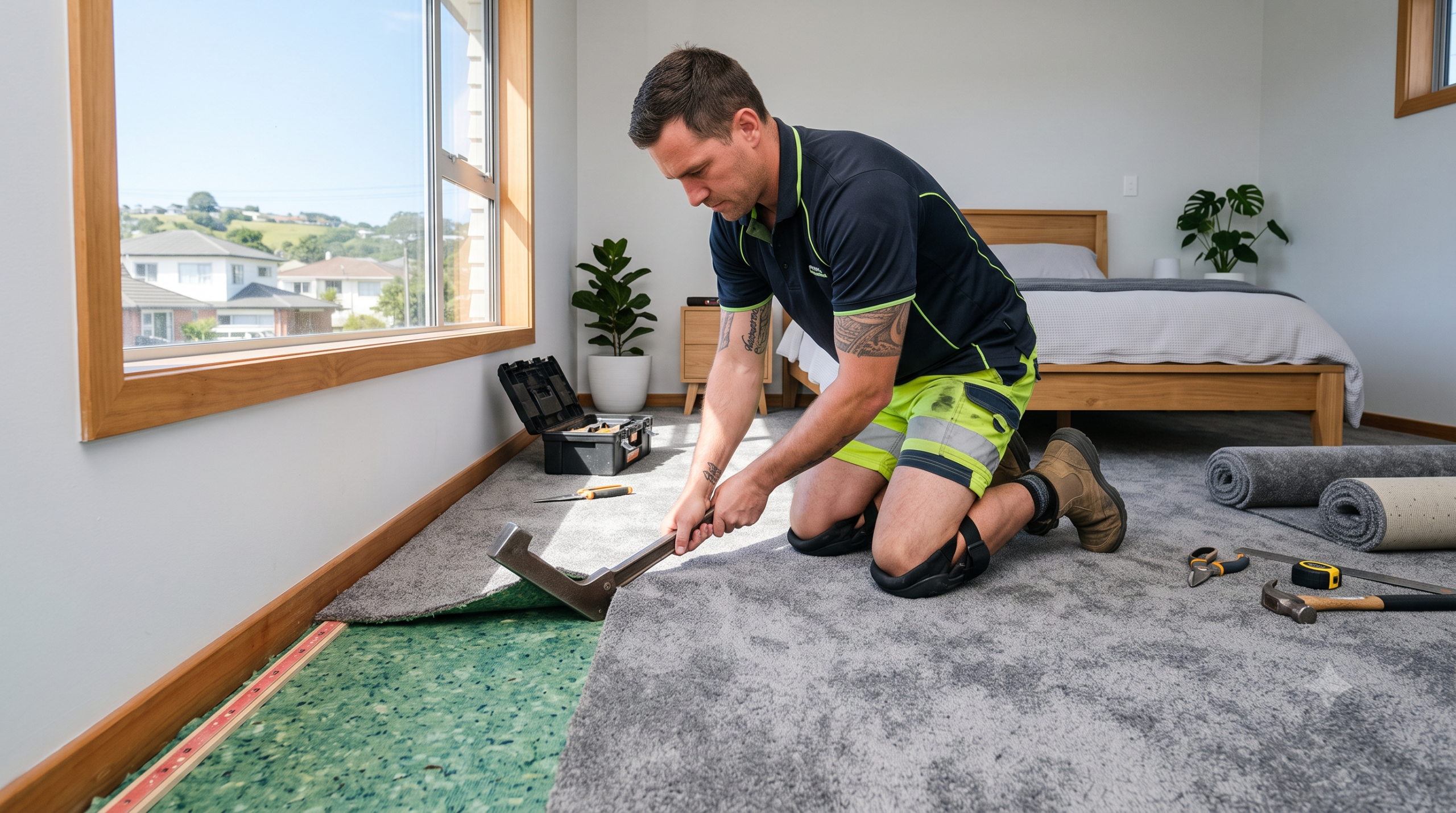
The average cost to supply and install new carpet in a standard 3-bedroom New Zealand home ranges from $6,000 to $12,000 in 2026, including underlay and labour. For high-end natural wool carpets or premium underlays, the total can exceed $14,000+ depending on floor area and preparation required.
Carpet remains the most popular flooring choice for bedrooms and lounges in NZ due to its warmth and acoustic comfort. However, a flooring showroom can be confusing, because carpet in NZ is traditionally priced by the “Broadloom Metre” — not the standard square metre (m²) used for timber or tiles.
In this guide, a Quantity Surveyor translates the realistic 2026 market rates for carpet, underlay, and installation, and explains the pricing traps to avoid.
The Broadloom Metre Explained
Before looking at prices, understand the maths. In NZ, a standard roll of carpet is manufactured 3.66 metres wide.
1 Broadloom Metre (BLM) = a piece of carpet 1m long by 3.66m wide (which equals 3.66m²).
Retailers often display prices per Broadloom Metre to make the carpet look cheaper than it is.
QS Tip: To convert a showroom Broadloom Metre price to a square metre (m²) price, divide by 3.66. For example, $150 per BLM ÷ 3.66 = $41 per m². Always ask for a “per m² fully installed” rate so you can compare carpet fairly against timber or tile.
Carpet Material & Installation Costs NZ (2026)
These are Supply & Install rates per m² (including standard underlay and basic installation labour), shown in square metres for easy comparison with other flooring.
| Carpet Type | Cost (installed per m²) | QS Notes |
|---|---|---|
| Polyester / polypropylene | $30 – $50 / m² | Cheapest synthetic. Prone to flattening and staining. Used mainly for rentals or spec homes |
| Solution-dyed nylon (SDN) | $55 – $95 / m² | Most popular for modern Kiwi homes. Durable, fade-resistant against harsh NZ UV, easy to clean, pet-friendly |
| Wool (natural) | $80 – $150+ / m² | Premium, eco-friendly, naturally fire-resistant. Excellent thermal and acoustic properties. Can fade in direct sun and is harder to clean |
| Wool/nylon blend (e.g. 80/20) | $70 – $110 / m² | Combines the luxury feel of wool with the durability and shape-retention of nylon |
The Hidden Cost Drivers
If a retailer advertises “free installation,” the labour cost is buried in the carpet price. A professional quote involves several separate line items:
1. Underlay upgrade ($15 – $25+ per m²)
Carpet is only as good as the underlay beneath it. Standard builder-grade foam (9–10mm) is usually included in base quotes. Upgrading to a high-density 11mm or rubber waffle underlay significantly improves the lifespan and feel of the carpet, and the acoustic dampening between floors. Worth the upgrade on quality carpet.
2. Old carpet uplift and disposal ($5 – $10 per m²)
The new carpet cannot be laid until the old one is gone. Installers charge to rip up the old carpet, pull out hundreds of staples, and pay commercial tipping fees to dispose of the old material — typically $500 – $1,000 on a standard house.
3. Stair surcharge ($25 – $50 per step)
Laying carpet in a square bedroom is fast. A staircase is slow and labour-intensive — the carpet must be cut, stretched, and stapled tightly over the tread and riser (or bullnose) of every step. Expect a per-step surcharge for installation labour on any staircase.
4. Floor preparation and door trimming
If you pull up old carpet and find rotten particleboard or a cracked slab, the installer halts until the substrate is repaired and levelled. And if your new carpet and underlay are thicker than the old, internal doors will drag — requiring a builder (approx. $80/hr) to remove, trim, and rehang them. See: [Flooring Cost per m² NZ (2026)]
Frequently Asked Questions
Can I install carpet myself?
Technically yes, but it is highly discouraged. Carpet laying requires specialist tools — power stretchers, knee kickers, and seaming irons. If the carpet is not stretched correctly, it develops wrinkles and ripples (“bubbling”) within months, which ruins the carpet and requires a professional to re-stretch it, voiding the manufacturer’s warranty in the process.
Do I need building consent to replace carpet?
No. Replacing carpet or any soft flooring in dry areas — bedrooms, hallways, lounges — is cosmetic maintenance and is exempt from Building Consent.
How much extra carpet should I order for wastage?
Because carpet comes in fixed 3.66m-wide rolls, you cannot buy the exact square meterage of your rooms. Depending on your layout and where seams fall, order 10–20% extra for cuts and wastage. A good flooring company uses CAD software to optimise the layout and minimise waste.
What is the difference between wool and solution-dyed nylon?
Wool is a premium natural fibre with excellent warmth, acoustic performance, and natural fire resistance, but it costs more and can fade in direct sun. Solution-dyed nylon has the colour locked into the fibre, making it extremely fade- and stain-resistant — ideal for sunny NZ living areas and homes with pets. Nylon is the more practical choice for high-traffic family homes; wool is the premium comfort choice.
How long does carpet last in a NZ home?
A quality solution-dyed nylon or wool carpet lasts 10–15+ years in a well-maintained home. Cheap polyester in a high-traffic area may flatten and wear within 5–7 years. Underlay quality directly affects lifespan — a good underlay can add years to the carpet above it.
Summary: Carpet Cost NZ 2026
| Item | Cost |
|---|---|
| Standard 3-bed home (installed) | $6,000 – $12,000 |
| Polyester / polypropylene | $30 – $50 / m² |
| Solution-dyed nylon | $55 – $95 / m² |
| Wool (natural) | $80 – $150+ / m² |
| Wool/nylon blend | $70 – $110 / m² |
| Underlay upgrade | $15 – $25+ / m² |
| Old carpet uplift & disposal | $5 – $10 / m² |
| Stair installation | $25 – $50 / step |
For adjacent interior fit-out budgeting: