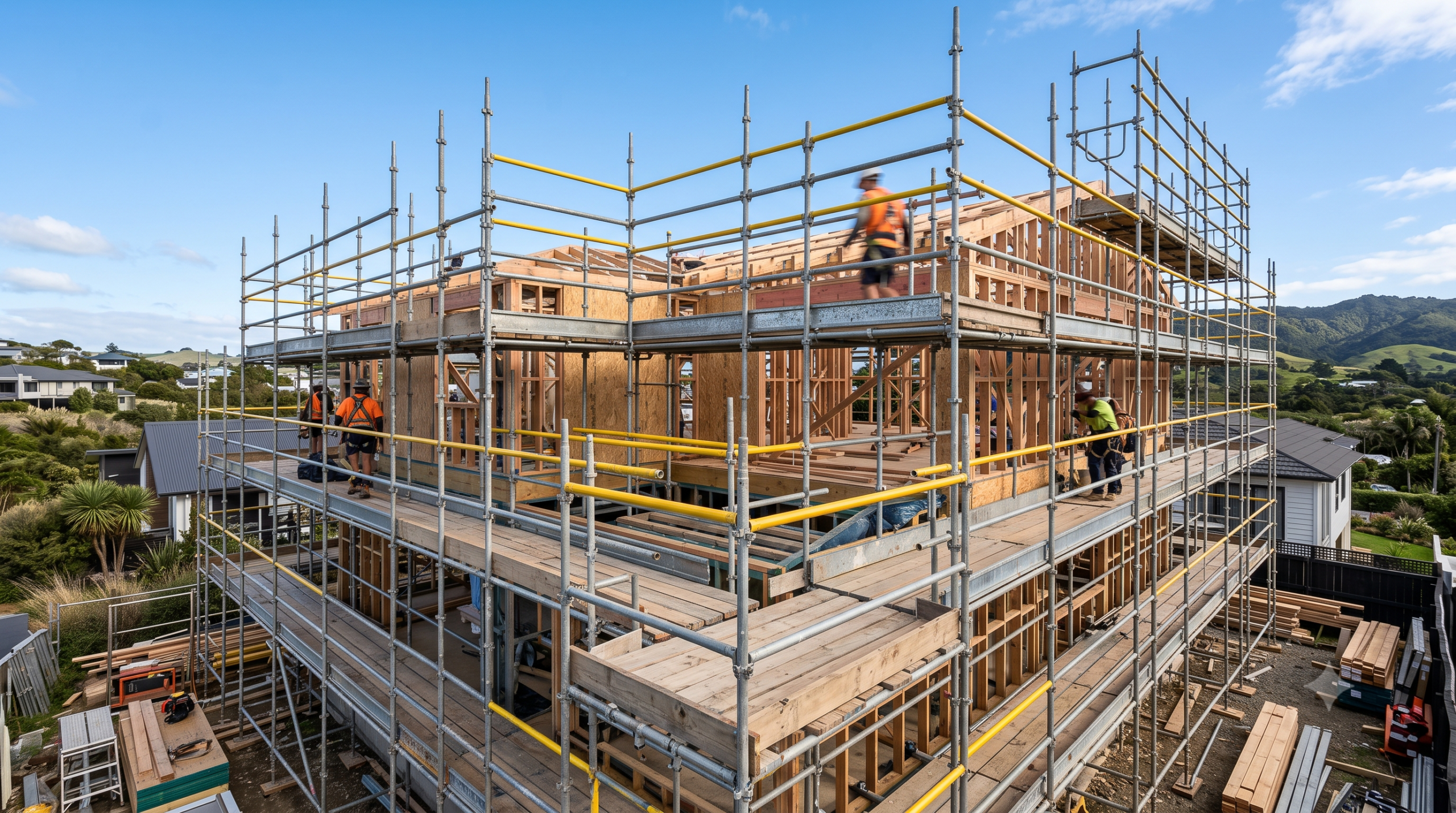
The average cost to erect, dismantle, and hire scaffolding for a standard single-storey New Zealand home ranges from $2,500 to $4,500 in 2026. For a two-storey home or a hill site, total scaffolding costs typically run $5,000 – $10,000+.
Scaffolding is the prerequisite for almost all exterior construction work in NZ. Under WorkSafe NZ regulations for working at heights, your roofers, painters, and builders cannot legally start work until compliant edge protection or a full perimeter scaffold is in place.
In this guide, a Quantity Surveyor breaks down the realistic 2026 market rates for scaffolding — and explains how weather delays and slow sub-trades quietly extend the bill week after week.
How Scaffolding Quotes Are Structured in NZ
Scaffolding is not something you buy — it is a rental service paired with skilled, high-risk labour. A professional quote splits into two distinct parts:
1. Erect & dismantle (the setup cost)
A fixed, one-off fee covering truck transport, the labour to build the scaffold, and the labour to dismantle it at project end. This is the largest single component of the bill.
- Cost: $25 – $35 per m² of scaffold face, or $80 – $120 per lineal metre of house perimeter
2. Weekly hire rate (the rental)
Once the scaffold is up, you pay an ongoing weekly rental for as long as it remains on site.
- Cost: $1.50 – $2.50 per m² per week
- Most companies mandate a minimum 2–4 week hire period
Typical Residential Scaffolding Packages (2026)
| Project Scope | Total Cost (incl. 4 weeks hire) | QS Notes |
|---|---|---|
| Roof edge protection only | $1,500 – $2,500 | Handrails clamped to the fascia or top plate. Used for roof replacements on single-storey homes |
| Standard 1-storey house repaint | $2,500 – $4,500 | Full perimeter scaffold for safe access to soffits and high weatherboards |
| Standard 2-storey new build | $5,000 – $8,500 | Multiple platform lifts, internal ladders, and engineered load calculations |
| Hill site / difficult access | $8,000 – $15,000+ | Where trucks cannot access the site, scaffolders hand-carry steel tubes up stairs or banks |
The Hidden Cost Drivers
1. Shrink wrapping ($20 – $40+ per m²)
For major renovations — a roof replacement or weathertightness repair — during the NZ winter, the exposed framing cannot be left open to rain. The scaffold must be shrink-wrapped, encasing the house in a heat-shrunk plastic envelope. This significant additional cost is not included in standard scaffolding rates.
2. Sub-trade delays — the most common cost overrun
You hire scaffolding for 4 weeks so the painters can repaint the exterior. It rains for two weeks, the painters are delayed, and the scaffold just sits there. You keep paying the weekly hire rate ($400 – $800+ per week) until the sub-trades finish. When comparing quotes, ask what the weekly rate is after the included period — this number matters more than the setup fee on any weather-dependent project.
3. Weekly tag inspections
Under WorkSafe rules, scaffolding over 5 metres must be inspected and tagged by a certified scaffolder every 7 days to verify structural integrity — especially after high winds. This weekly inspection often carries a recurring call-out fee. Confirm whether it is included in the hire rate.
Frequently Asked Questions
Can I build my own scaffolding to save money?
Scaffolding where a person or object could fall more than 5 metres must be erected by a certified scaffolder holding the appropriate Certificate of Competence. Below 5 metres, certification is not mandatory — but you still carry full health and safety duties, and in practice, if a tradesperson considers a DIY scaffold unsafe, they will refuse to work from it. For anything beyond single-storey edge work, professional scaffolding is the realistic option.
Why does the scaffolding company need to see my site before quoting?
A company cannot quote accurately from house plans alone. They must inspect for overhead power lines (which require network company permits and minimum clearance distances), sloped driveways, and soft ground requiring load-spreading base plates. A site visit protects you from variation charges later.
How long can I keep the scaffolding?
As long as you keep paying the weekly hire. There is no fixed maximum — but the weekly rate makes slow projects expensive. The key is sequencing your sub-trades tightly: book the roofer, painter, and any exterior trades to run consecutively so the scaffold comes down as early as possible.
Does scaffolding damage my property?
A professional crew uses protective base plates on driveways and lawns, and standoff brackets to avoid contact with cladding. Some marking of soft lawn is normal after weeks of load. Photograph your driveway and gardens before erection, and confirm the company carries public liability insurance.
Do I need scaffolding for single-storey roof work?
Yes, in almost all cases. WorkSafe requires fall protection for any work at height where a fall could cause injury — in practice, roof edge protection is the minimum for single-storey roof replacement or repair. Roofers will not start without it, and it is typically arranged by the roofing contractor and itemised in their quote. See: [Roofing Cost NZ (2026)]
Summary: Scaffolding Cost NZ 2026
| Item | Cost |
|---|---|
| Roof edge protection only | $1,500 – $2,500 |
| 1-storey full perimeter (4 weeks) | $2,500 – $4,500 |
| 2-storey new build | $5,000 – $8,500 |
| Hill site / difficult access | $8,000 – $15,000+ |
| Erect & dismantle | $25 – $35 / m² of face |
| Weekly hire | $1.50 – $2.50 / m² / week |
| Shrink wrap | $20 – $40+ / m² |
For projects that require scaffolding access: