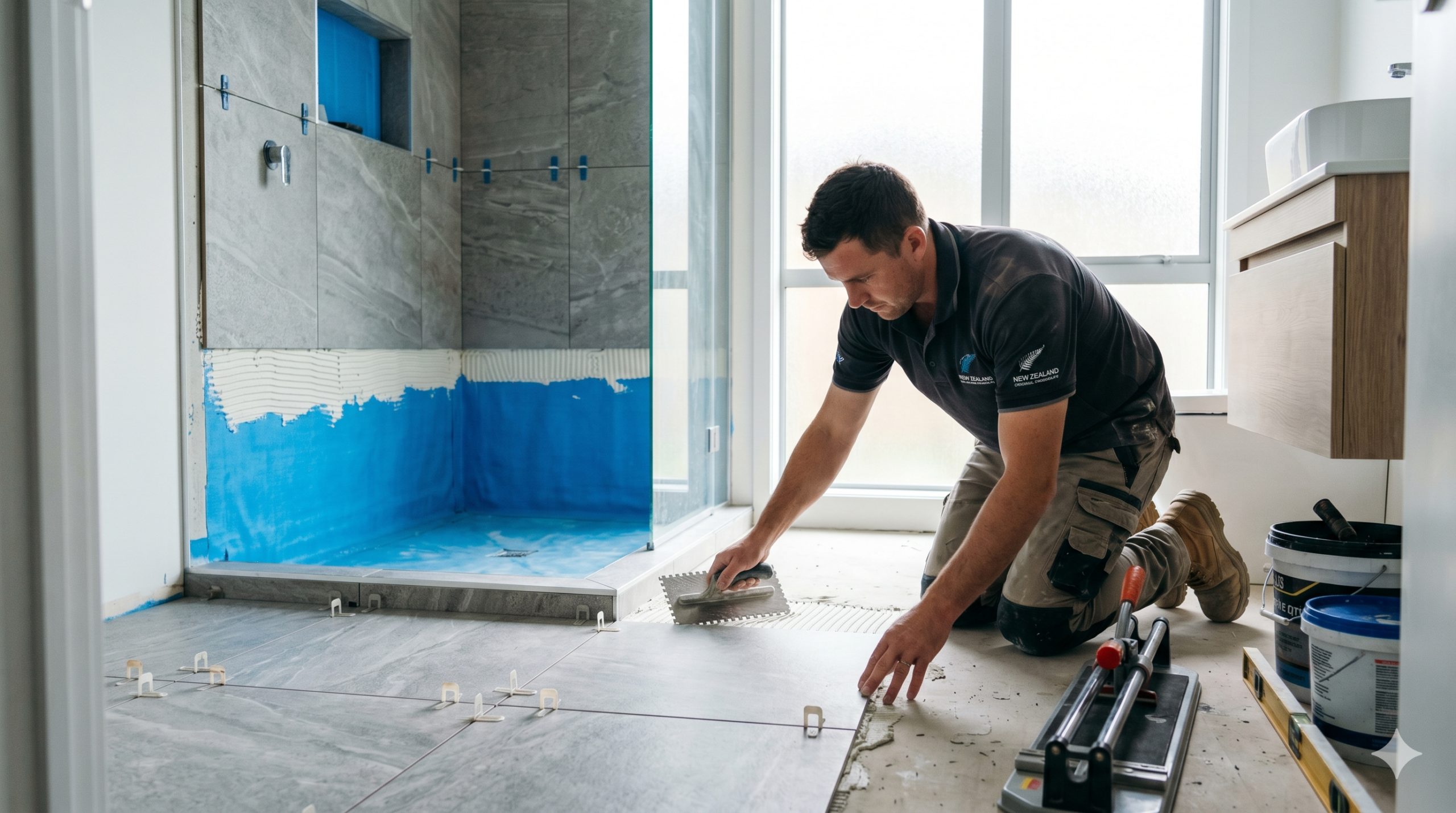
The average cost of tiling in New Zealand ranges from $150 to $250+ per m² for supply and installation in 2026. For a complete standard bathroom renovation, the total tiling budget — including mandatory waterproofing and floor preparation — typically sits between $8,000 and $15,000+ depending on tile size and coverage.
Tiling is one of the most expensive and permanent interior finishes in residential construction. While homeowners focus on the retail price of the tiles, the tiles themselves typically make up less than 30% of the final invoice. The bulk of the cost lies in the sub-trade labour, waterproofing membranes, and surface preparation required to ensure the wet area does not leak.
In this guide, a Quantity Surveyor breaks down the realistic 2026 market rates for residential tiling in NZ, and the hidden preparation costs that consistently push budgets up.
Tiler Hourly Rates & Per m² Installation Costs NZ
Professional tilers in NZ generally charge $80 – $120 per hour. For most residential projects, they quote a fixed rate per square metre. These are “Supply & Install” rates assuming standard floor preparation.
| Tile Material / Size | Cost per m² | QS Notes |
|---|---|---|
| Standard ceramic (e.g. 600×600) | $130 – $180 / m² | Most cost-effective. Easy to cut, standard adhesive |
| Porcelain (large format) | $160 – $240 / m² | Denser and heavier than ceramic. Requires diamond cutting tools and premium adhesives to prevent slumping |
| Natural stone (marble, travertine) | $250 – $400+ / m² | Highly porous. Requires pre-sealing and careful handling. Slowest installation |
| Mosaic / patterned (e.g. herringbone) | $200 – $300+ / m² | Material may be cheap, but complex patterns like herringbone require double the labour to align and grout |
The Hidden Cost Drivers
A tiling quote is rarely just “tiles and glue.” To comply with the NZ Building Code (specifically E3/AS1 Internal Moisture), budget for these three critical pre-tiling phases:
1. Council-approved waterproofing ($1,500 – $3,000+ per bathroom)
Tiles cannot be laid directly onto a timber floor or raw GIB board in a wet area. The entire shower and bathroom floor must be coated in a liquid or sheet waterproofing membrane, applied by a certified applicator who issues a producer statement or waterproofing certificate to the council confirming the bathroom will not rot the framing beneath.
2. Surface preparation: screeding and levelling ($500 – $1,500+)
Concrete slabs and timber floors are never perfectly flat. Laying large 600×600 porcelain tiles on an uneven floor causes tiles to “lip” (sit unevenly). The tiler pours a self-levelling compound before starting. For showers, they hand-form a sand/cement screed to create the exact fall towards the drain.
3. Edging and trim details
Where tiles meet at an external corner (a shower niche or half-wall), the edges must be finished:
- Standard: Aluminium trims — cost-effective, standard look
- Premium: Mitred edges — the tiler grinds each tile edge to 45 degrees for a seamless look. This takes considerable skill and significantly increases labour cost
Frequently Asked Questions
Do I need building consent to re-tile my bathroom?
Replacing floor tiles in a kitchen or living room does not require consent. However, re-tiling a shower means breaking the existing waterproofing membrane — and under the Building Act, replacing a waterproofing membrane in a wet area requires a Building Consent to ensure the new membrane complies with the code. See: [Building Consent Cost NZ (2026)]
Can I save money by buying the tiles myself?
Yes. Homeowners can often negotiate better retail discounts during showroom sales. If you supply the tiles, the tiler charges only for labour, glue, and grout — typically $80 – $130 per m². Order 10–15% extra for wastage and cuts. Note that if you supply tiles and they run short mid-job, the delay and re-mobilisation can erode the saving.
Is underfloor heating worth the extra cost?
An electric undertile heating mat typically adds $800 – $1,500 per bathroom including the electrician’s connection. Given how cold NZ houses get and how effectively tile holds the cold, it is popular for master ensuites and adds resale appeal. It must be connected by a registered electrician. See: [Heat Pump Installation Cost NZ (2026)]
How long does it take to tile a bathroom?
A standard bathroom takes 4–7 working days end to end — but not continuously. Waterproofing must cure (typically 24–48 hours) before tiling begins, and tile adhesive must cure before grouting. The fixed stages mean a tiler cannot rush a compliant wet-area installation.
Why is waterproofing so important in a tiled bathroom?
Waterproofing is the single most critical step in a wet area. If the membrane fails, water penetrates the GIB and timber framing behind the tiles, causing rot and structural damage that is expensive and disruptive to repair. This is why the NZ Building Code requires a certified membrane and producer statement — and why it cannot be skipped to save cost.
Summary: Tiling Cost NZ 2026
| Item | Cost |
|---|---|
| Tiler (hourly) | $80 – $120 / hr |
| Standard ceramic (supply & install) | $130 – $180 / m² |
| Porcelain large format | $160 – $240 / m² |
| Natural stone | $250 – $400+ / m² |
| Labour only (you supply tiles) | $80 – $130 / m² |
| Waterproofing (per bathroom) | $1,500 – $3,000+ |
| Underfloor heating (per bathroom) | $800 – $1,500 |
For adjacent interior fit-out budgeting:
Great content! Keep up the good work!
Thanks so much for stopping by and taking the time to leave a comment. It really means a lot! Cheers!