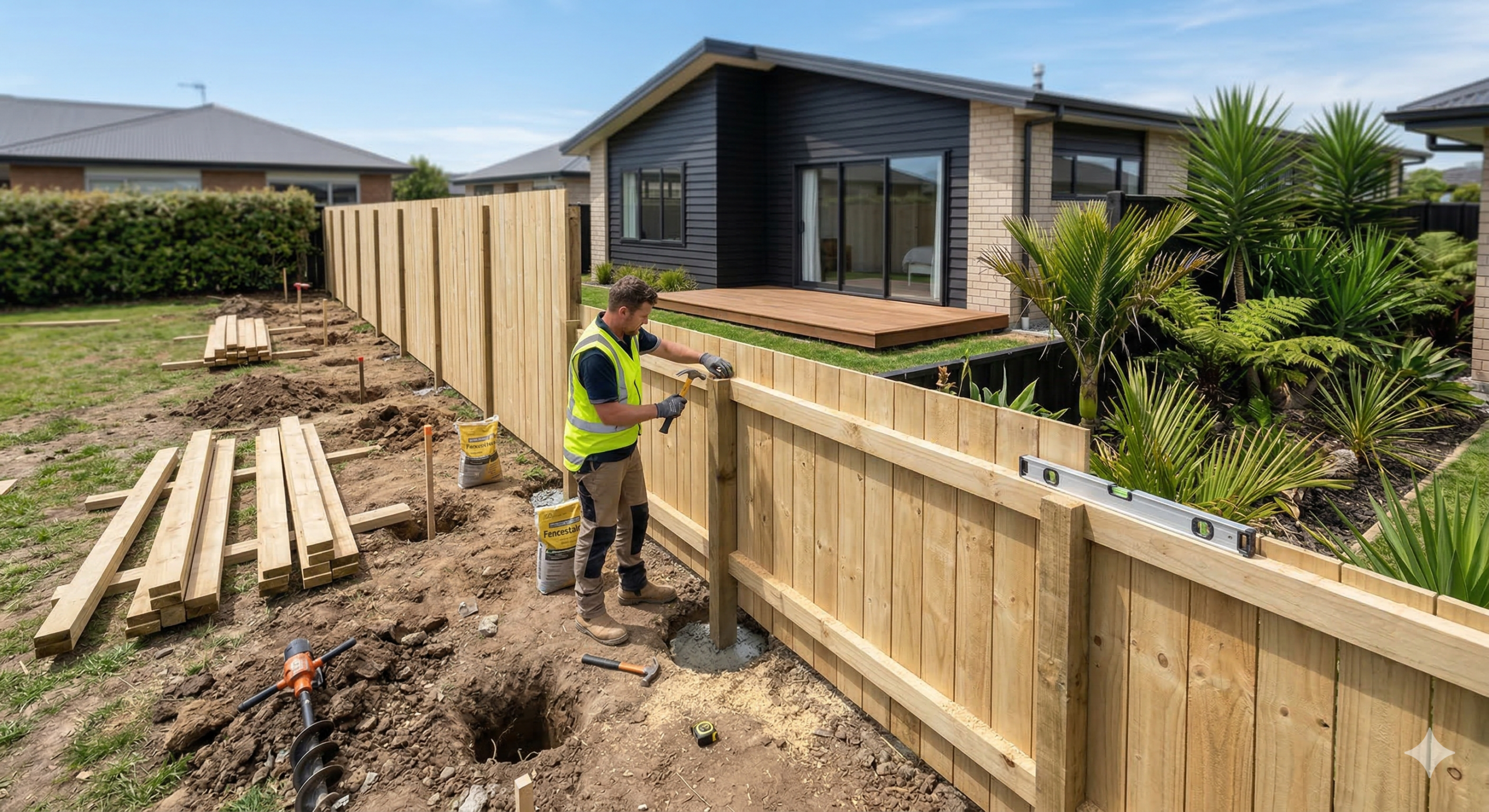
Building a new fence is one of the most common outdoor projects for New Zealand homeowners. Whether you are establishing a new boundary, upgrading for privacy, or keeping pets secure, understanding the true cost per lineal metre is essential for your budget.
In 2026, the average cost to build a standard boundary fence in New Zealand ranges from $180 to $450+ per lineal metre, depending on the materials, height, and site conditions. For most homeowners, the total fence cost in NZ will depend on the length of the boundary, the type of fencing material, and labour costs.
As a Quantity Surveyor estimating residential projects across Auckland and the wider New Zealand market, I see homeowners constantly underbudgeting for structural landscaping. In this guide, I will break down the real costs of timber vs. Colorsteel fences, what drives the price up, and how the Fencing Act affects your wallet.
Average Fence Cost per Metre NZ (2026)
To get a quick idea of your budget, here are the estimated costs per lineal metre for a standard 1.8m high residential fence (including materials and professional installation).
| Fence Type | Cost per Lineal Metre (Installed) | Best For |
| Standard Timber Paling | $180 – $250 / m | Cost-effective boundary fencing |
| Colorsteel (Metal Panel) | $200 – $300 / m | Low maintenance, modern look |
| Premium Timber (Horizontal Slat) | $300 – $450 / m | Architectural street-facing appeal |
| Concrete / Block Wall | $600 – $1,000+ / m | Acoustic blocking, high-end security |
(Note: These are baseline estimates for flat sites with easy access. Retaining, clearing old fences, or sloping ground will increase these rates.)
Average Fence Cost for a 20m Boundary
Most residential boundary upgrades involve replacing at least one full side of a section. Here is what you can expect to pay for a typical 20-metre run:
| Fence Type | Estimated Total Cost (20m Boundary) |
| Standard Timber Paling | $3,600 – $5,000 |
| Colorsteel (Metal Panel) | $4,000 – $6,000 |
| Premium Timber (Horizontal Slat) | $6,000 – $9,000 |
Timber vs. Colorsteel: Which is Better?
The two most popular fencing options in New Zealand are treated timber (usually pine) and pre-painted steel panels (like Colorsteel).
Timber Fencing (The Classic Kiwi Choice)
- Pros: Usually the most affordable upfront. Easy to repair, highly customizable, and naturally blends into landscaping.
- Cons: Requires ongoing maintenance (staining or painting every few years). Timber can warp or twist over time depending on weather exposure.
Colorsteel Fencing (The Modern Upgrade)
- Pros: Zero maintenance—no painting or staining required. It won’t warp, rot, or get eaten by insects. It also looks identical from both sides, which keeps both neighbours happy.
- Cons: More expensive to repair if a panel gets heavily dented.
The Hidden Costs: What Increases Your Fencing Budget?
When I review builder quotes, the base rate per metre is only half the story. Be prepared for these site-specific factors that can easily add thousands to your final bill:
- Demolition and Removal: If you are replacing an existing fence, the builder needs to dismantle it and take it to the landfill. Dumping fees and labour for removal typically add $40 to $80 per metre.
- Hard Digging and Roots: Fencing requires deep holes for the posts. If your property is built on hard clay, volcanic rock, or has massive tree roots along the boundary, the extra labour or specialized drilling equipment will inflate the cost.
- Sloping Terrain: Fencing on a slope requires either a stepped design or custom-cut bottom edges to follow the ground contour. Both take significantly more labour than building on a flat section.
- Integrated Retaining: A standard fence cannot hold back soil. If your boundary has a height difference, you will need to build a retaining wall underneath the fence. (See our comprehensive Retaining Wall Cost NZ guide to price this component).
The Fencing Act 1978: Sharing the Cost
If you are building a boundary fence between two private properties, the Fencing Act 1978 applies. The general rule in New Zealand is that adjoining neighbours share the cost of an “adequate” boundary fence 50/50.
However, you cannot just build an expensive premium fence and hand your neighbour the bill. You must issue them a formal “Fencing Notice” detailing the proposed fence, estimated costs, and their share. If they want a basic $180/m timber fence and you want a $400/m horizontal slatted fence, you will likely have to pay the difference yourself.
Frequently Asked Questions (FAQ)
How much does a 20 metre fence cost in NZ?
For a standard timber boundary fence, a typical 20 metre section will cost between $3,600 and $5,000 including installation.
What is the cheapest fence option in NZ?
The cheapest fencing option in New Zealand is usually a treated pine timber paling fence, costing around $180 to $220 per metre.
Do I need building consent for a fence in NZ?
Under the NZ Building Code, you do not need a building consent to build a fence as long as it is under 2.5 metres in height. However, many local councils have district plan rules that restrict front yard (street-facing) fences to 1.2m or 1.5m. Always check your local council’s specific rules before building.
How long does a timber fence last?
A properly installed treated pine (H3.2 or H4) timber fence should last 15 to 20+ years. Regular staining and ensuring the bottom palings are not buried in wet soil will extend its lifespan.
(Internal Link Suggestion: A new fence is often just the beginning. Once your boundary is secure, check out our Landscaping Cost NZ guide to plan your wider backyard transformation, or review our Deck Cost NZ guide to build the perfect outdoor entertainment area.)