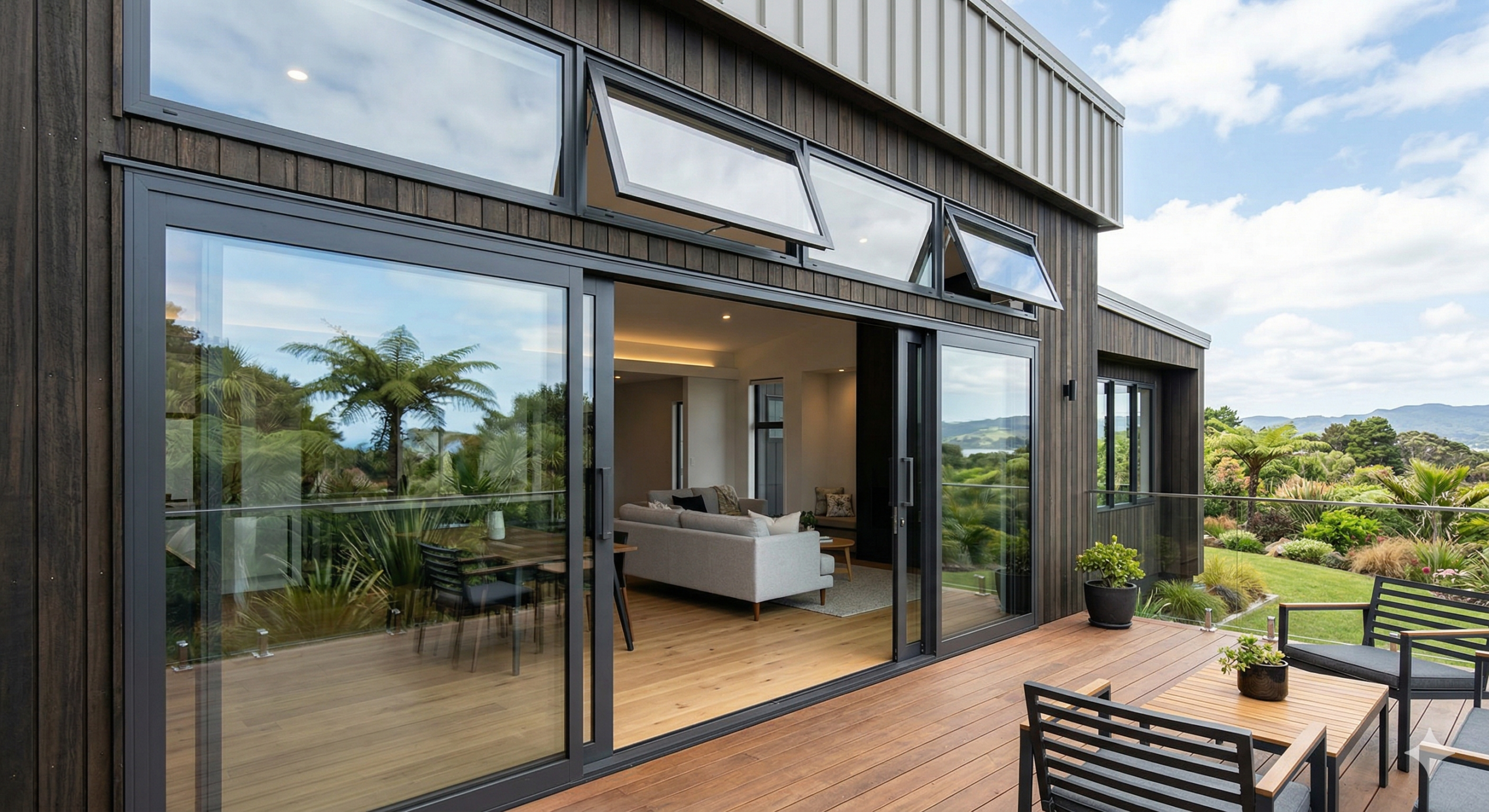
The average cost to replace all windows in a standard 3-bedroom New Zealand home ranges from $20,000 to $35,000+ for full frame replacement in 2026. If you are retrofitting double glazing into existing frames only, expect to pay $10,000 – $18,000.
Upgrading from single-glazed to double-glazed windows eliminates condensation, reduces draughts, and improves energy efficiency. With the 2023 updates to the NZ Building Code (H1 Energy Efficiency) requiring significantly higher thermal performance, choosing the right window system matters more than ever.
In this guide, a Quantity Surveyor breaks down the real 2026 rates per window, the retrofit vs full replacement cost comparison, and the hidden structural costs that consistently push final invoices above the original quote.
Window Replacement Cost NZ (2026) — Per Window Rates
These are fully installed costs for replacing an existing single-glazed window with a modern double-glazed unit. Window size, wind zone, and glass specification (standard double vs Low-E argon) can shift pricing significantly within these ranges.
| Window Type | Estimated Cost (Installed) | QS Notes |
|---|---|---|
| Small awning (e.g., bathroom) | $700 – $1,200 | Includes frosted/obscure safety glass |
| Standard bedroom window | $1,200 – $2,000 | Approx. 1.2m × 1.5m, opening sashes |
| Large lounge / picture window | $2,000 – $3,500+ | Large fixed panes require thicker glass for NZ wind zones |
| Standard ranch slider | $3,500 – $7,000+ | Toughened safety glass legally mandatory — thermally broken and Low-E specification pushes to upper end |
| Bifold / French doors | $6,000 – $12,000+ | Complex hardware, heavy structural lintels, and multi-panel configurations add significantly |
Typical Total Cost by House Size (2026)
| House Size | Retrofit Double Glazing | Full Frame Replacement |
|---|---|---|
| 2-bed (approx. 8–10 windows) | $8,000 – $14,000 | $14,000 – $24,000 |
| 3-bed (approx. 12–15 windows) | $10,000 – $18,000 | $20,000 – $35,000+ |
| 4-bed (approx. 16–20 windows) | $14,000 – $22,000 | $28,000 – $45,000+ |
QS Note: Window counts vary significantly by house design. These are indicative ranges based on typical NZ residential layouts.
Retrofit vs Full Replacement: Which is Right for You?
| Retrofit Double Glazing | Full Frame Replacement | |
|---|---|---|
| What happens | Old single-pane glass removed, new IGUs inserted into existing frames | Entire window and frame removed and replaced |
| Cost (3-bed) | $10,000 – $18,000 | $20,000 – $35,000+ |
| Best for | Frames in good condition, budget-conscious upgrades | Frames with rot, poor weathertightness, or H1 compliance required |
| Disruption | Minimal — no cladding damage | Significant — carpentry, re-flashing, interior repair |
| Thermal performance | Good improvement | Best possible result |
QS Tip: If your existing frames are aluminium and in reasonable condition, retrofit glazing is excellent value. If frames show signs of corrosion, water staining around the reveal, or if you are doing a consented renovation, full replacement is the better long-term decision. Note that retrofit may not be suitable where existing frames lack drainage channels or adequate weathertight detailing — a common issue in pre-2000 aluminium joinery.
Framing Material: Aluminium vs uPVC vs Timber
Standard aluminium The cheapest framing option historically. Standard aluminium without a thermal break no longer complies with NZ Building Code H1 requirements for new builds and consented renovations. Not recommended for performance upgrades.
Thermally broken aluminium (add 15–25%) The current NZ standard. A polyamide thermal break separates the interior and exterior aluminium, eliminating cold transfer and condensation on the frame. Required for H1 compliance in most new and consented work.
uPVC (comparable cost to thermally broken) Highly energy-efficient, zero maintenance, and excellent acoustic insulation. Growing rapidly in NZ market share. A strong alternative to thermally broken aluminium for retrofit and new builds alike.
Timber (add 50–80%+) Premium aesthetic with excellent thermal properties. Expensive to manufacture and requires rigorous ongoing maintenance. Typically specified in heritage or high-end architectural projects only.
QS Note on H1 compliance: H1 compliance is based on achieving minimum R-values for the building envelope as a whole — not just the window unit in isolation. Glass specification (Low-E coating, argon gas fill), frame material, and installation detailing all contribute to the overall thermal performance assessment.
The Hidden Cost Drivers
1. Rotten timber remediation When old windows are removed, the framing underneath is exposed. In homes built between 1980 and 2005 — particularly those with monolithic cladding systems — finding water damage or rotten structural timber is extremely common. Replacing affected framing can add $2,000 – $10,000+ to your project and is impossible to price accurately until the window comes out.
2. Scaffolding and edge protection Upper-level windows on a two-storey home cannot be replaced safely off a ladder under WorkSafe NZ requirements. Scaffolding or edge protection for a full two-storey window replacement programme adds $3,000 – $8,000+ before any installation begins.
3. Cladding and flashing repairs Removing a full window frame commonly damages surrounding cladding — particularly stucco, plaster, or brick — and interior plasterboard. Modern E2/AS1 weathertightness standards require robust head flashings, sill trays, and flexible flashing tapes on reinstallation. Allow $300 – $800+ per window for cladding repair and exterior repainting.
4. Interior reinstatement Full frame replacement often damages interior linings around the window reveals. GIB patching, stopping, and repainting the interior is a separate cost that is frequently underestimated. Budget $200 – $600+ per window for a professional interior finish.
5. Curtains and blinds Existing curtains, blinds, or shutters must be removed before installation and refitted afterwards. Depending on the system, this can be straightforward or require a specialist. Allow $50 – $300 per window depending on the type of treatment.
6. Lead paint (older homes) Homes built before 1980 almost certainly have lead-based paint around window frames and reveals. Sanding or disturbing lead paint generates toxic dust. Testing and safe containment and removal may add $1,000 – $5,000+ depending on the extent — get testing done before work begins.
Do I Need Building Consent to Replace My Windows?
Like-for-like replacement (same size, same opening): Generally exempt under Schedule 1 of the Building Act. No consent required.
Changing the opening size, adding a new window, or converting a window to a door: Building consent required — this affects the structural envelope.
Known leaky building or monolithic cladding system: Building consent strongly recommended regardless of scope. The council will want to verify weathertightness detailing on any work touching the envelope.
Frequently Asked Questions
What is the H1 Building Code change for windows? The 2023 H1 Energy Efficiency updates require windows to achieve significantly higher thermal resistance (R-values). Compliance is based on achieving minimum R-values for the building envelope as a whole — not just the window unit itself. Standard aluminium frames with basic double glazing often do not comply for new builds or consented renovations. Low-E glass, argon gas fills, and thermally broken or uPVC frames are now the minimum specification for compliant work.
Is retrofit double glazing worth it? Yes, in most cases. Retrofitting IGUs into existing aluminium frames at $10,000–$18,000 for a 3-bedroom home delivers significant improvements in thermal comfort and condensation reduction at a fraction of full replacement cost. The payback period through energy savings is typically 8–12 years.
How long does window replacement take? A standard 3-bedroom full frame replacement typically takes 2–4 days for the window installation itself. Allow additional time for carpentry, re-flashing, plastering, and painting — the full project including interior reinstatement is typically 1–2 weeks.
Can I replace windows myself in NZ? The physical removal and installation of windows is not licensed work in NZ, so DIY is technically possible for like-for-like replacement. However, ensuring correct weathertightness detailing — flashings, sill trays, and sealing — is critical. Incorrect installation is one of the most common causes of leaky building issues. For any consented work, an LBP must be involved.
Why do window replacement quotes vary so much? Window size, wind zone classification, and glass specification (standard double vs Low-E argon) shift the per-unit cost significantly. Add variation in site access, the condition of existing frames, and whether interior reinstatement is included in scope — and two quotes can look very different for the same number of windows. Always ask for an itemised breakdown before comparing.
Summary: Window Replacement Cost NZ 2026
| Window Type | Cost per Window |
|---|---|
| Small awning | $700 – $1,200 |
| Standard bedroom window | $1,200 – $2,000 |
| Large lounge / picture window | $2,000 – $3,500+ |
| Ranch slider | $3,500 – $7,000+ |
| Bifold / French doors | $6,000 – $12,000+ |
| Full replacement (3-bed home) | $20,000 – $35,000+ |
| Retrofit double glazing (3-bed home) | $10,000 – $18,000 |
For broader renovation budgeting: